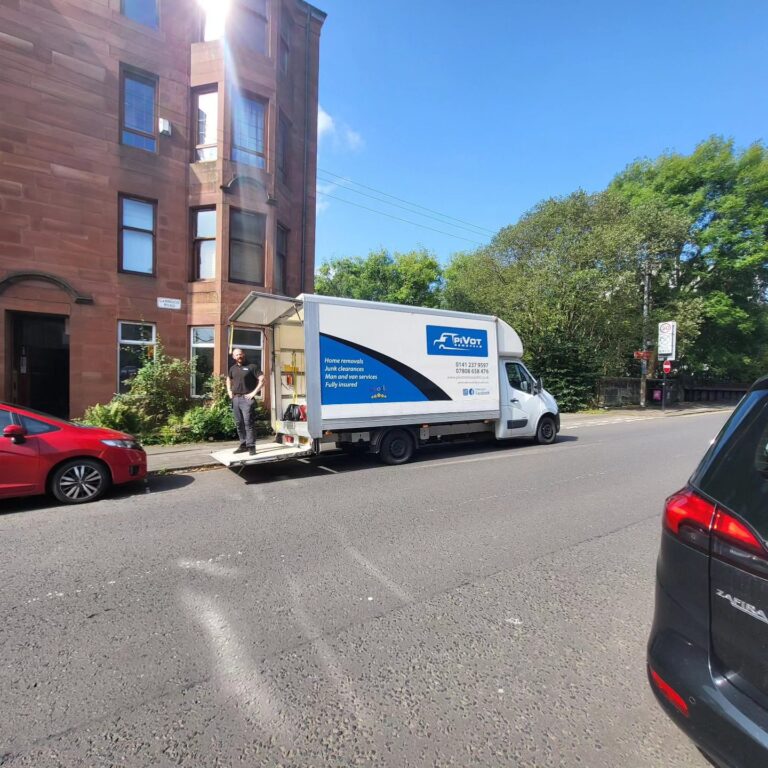
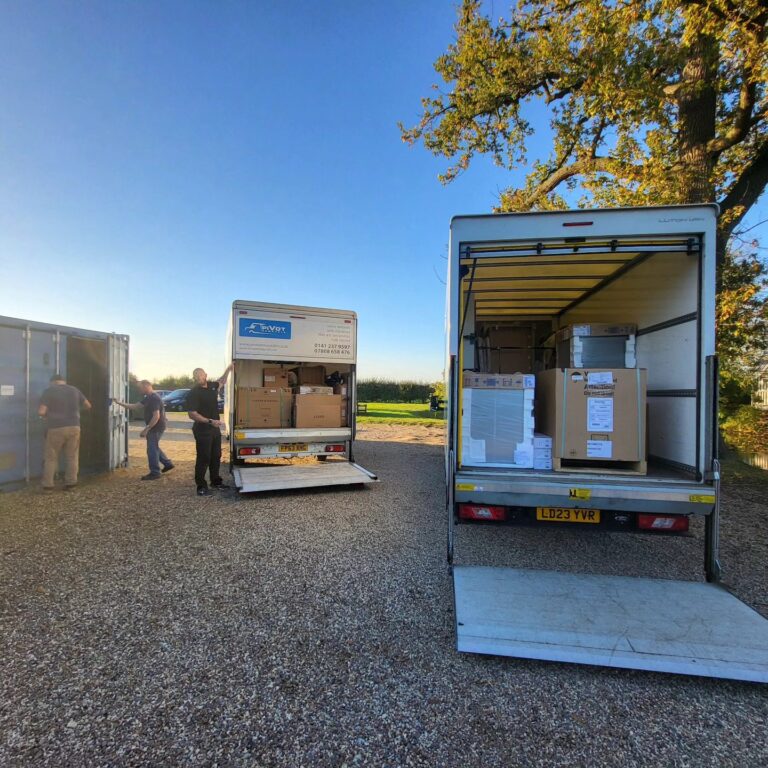
Moving from a flat in Glasgow can feel very different from moving from a house. Many flats across the city come with shared closes, narrow stairwells, controlled entry doors, limited parking and older layouts that were not designed with modern furniture in mind. If you live in a tenement, a top-floor flat, a city centre apartment or a building with tight communal areas, planning ahead can make a huge difference on moving day.
At Pivot Removals Ltd, we help customers move from flats across Glasgow and the surrounding areas. We understand the challenges that come with stairs, shared entrances, parking restrictions and tricky access points. With the right preparation, your move can be handled safely, smoothly and with far less stress.
This guide explains what to think about before moving from a Glasgow flat, how to prepare your building for removals and what you can do to help your moving team work as efficiently as possible.
Why moving from a flat in Glasgow needs extra planning
Glasgow has a wide mix of properties, from traditional sandstone tenements to modern apartment blocks, converted townhouses and high-rise flats. Each type of building can present its own moving challenges.
In a traditional tenement, you may need to move furniture down several flights of stairs through a shared close. In a modern block, you may have a lift, but it might be too small for large items or shared with other residents. In a city centre flat, the issue may be parking rather than stairs. On some streets, getting a removals van close to the building can be difficult without advance planning.
This is why it helps to think beyond packing boxes. When moving from a flat, access is one of the most important parts of the job. The more information we have in advance, the better we can prepare the right team, vehicle and equipment.
If you are looking for reliable home removals in Glasgow, Pivot Removals Ltd can help you plan around the layout of your property and the access available on the day.

Tell your removal company about stairs before moving day
Stairs are one of the biggest factors in a flat move. The number of floors, the width of the stairwell and the condition of the communal areas can all affect how long the move takes.
Before your move, make a note of:
- How many flights of stairs there are
- Whether the stairs are straight, curved or particularly narrow
- Whether there are tight turns on landings
- Whether the handrails reduce the available space
- Whether the close is well lit
- Whether there are any damaged steps or loose flooring
- Whether large items were difficult to get into the flat originally
This information helps us plan properly. For example, moving from a first-floor flat with wide stairs is very different from moving from a fourth-floor tenement with tight turns between landings.
It is also useful to tell us if any items are especially heavy or awkward. Large wardrobes, American-style fridge freezers, recliner sofas, exercise equipment, pianos and large dining tables all need careful handling. In some cases, items may need to be dismantled before they can be moved safely.
The earlier we know about these details, the easier it is to prepare.
Check whether large furniture will fit through the close
One common issue when moving from a Glasgow flat is discovering that furniture will not easily fit through the close, stairwell or front door. This can happen with sofas, bed frames, wardrobes, cabinets and large desks.
Before moving day, it is worth measuring:
- Your largest furniture items
- Your flat door
- The close entrance
- The narrowest point of the stairwell
- Any turns or corners on the route out
- The doorway at your new property
You do not need to measure every single item in your home, but it helps to check anything that looks awkward. If a sofa only just fitted when you moved in, it may need extra planning to get it out again.
Where possible, remove detachable parts before the removal team arrives. This may include sofa legs, shelves, bed slats, table legs and wardrobe doors. Keep screws and small fittings in a labelled bag so they are not lost during the move.
If you are not sure whether something needs to be dismantled, speak to us before the move. As an experienced Glasgow removal company, we can advise on what is likely to be safest and most practical.
Speak to neighbours before moving day
When you live in a flat, your move may affect other residents. The removals team may need to use the close for several hours, doors may need to be propped open and there may be more noise than usual while furniture is being carried out.
It is a good idea to let your neighbours know your moving date in advance. You do not need to make a big announcement, but a polite note or quick conversation can help avoid problems on the day.
You might want to mention:
- The date of your move
- The approximate time the removals team will arrive
- That the close may be busier than usual
- That you will do your best to keep access clear
- That you appreciate their patience
This is especially helpful if you share a narrow close, live in a small block or have neighbours with prams, bikes, mobility aids or regular deliveries.
Good communication can prevent frustration and make the day easier for everyone.
Check parking restrictions near your flat
Parking can be one of the biggest challenges when moving from a flat in Glasgow. Many streets have permit bays, double yellow lines, loading restrictions or limited space for larger vehicles. In busy areas, it may be difficult to park directly outside the building unless arrangements are made beforehand.
Before your move, check:
- Whether there is a loading bay nearby
- Whether your street has permit parking
- Whether there are time limits on loading
- Whether there are bus lanes or restricted areas
- Whether the removals van can stop safely
- Whether there is enough space for the vehicle doors to open
- Whether access changes at certain times of day
If the van has to park far from your flat, the move may take longer because every box and item of furniture needs to be carried further. This is not always avoidable, but knowing in advance helps with planning.
If you live on a narrow street, it can also help to speak to neighbours about keeping space clear where possible. Never block roads, pavements or emergency access, but do what you can to make loading safe and practical.
For professional removals in Glasgow, we always recommend giving as much access information as possible before moving day so we can prepare properly.
Ask your factor or building manager about moving rules
Some Glasgow flats, particularly modern apartment blocks, have rules around moving. These may be set by a factor, housing association, property manager or building owner.
Before moving day, check whether there are any rules about:
- Using lifts for removals
- Booking a moving slot
- Protecting communal flooring
- Propping open entry doors
- Parking near the building
- Using rear entrances or service doors
- Moving during certain hours
- Disposing of unwanted furniture
Some buildings require advance notice before large moves. Others may ask you to use a specific entrance or avoid peak times. If your building has a lift, there may be a protective cover available for moving day.
It is always better to check early. This avoids delays and reduces the risk of complaints from the building manager or neighbours.
Prepare lifts properly if your building has one
A lift can make a flat move easier, but it does not remove every challenge. Some lifts are too small for large furniture, some have weight limits and some may be busy with other residents.
If your building has a lift, check:
- The size of the lift
- Whether large items will fit
- Whether the lift can be reserved
- Whether there is a weight limit
- Whether protective padding is needed
- Whether the lift doors stay open long enough
- Whether there is a service lift
It is also worth checking whether the lift has been reliable recently. If the lift is known to break down or is due for maintenance, let your removals company know.
If you live in a building where the lift is essential for the move, any lift issue can cause serious delays. Having a backup plan is useful, especially if stairs are also available.
Clear the route through your flat and close
Before the removals team arrives, make sure the route from your flat to the van is as clear as possible. This saves time and reduces the risk of trips or damage.
Inside your flat, clear hallways and move loose items away from doors. In the close, avoid leaving bags, shoes, plants, bikes or boxes in the way. If you share the close with neighbours, you may not be able to control everything, but you can still clear your own items.
On moving day, the route should be clear from:
- The room being emptied
- The hallway
- The flat entrance
- The communal close
- The stairs or lift
- The building entrance
- The loading area outside
Good access allows the team to move safely and steadily. It also helps protect walls, floors and door frames.
Pack boxes properly for stairs
When moving from a flat with stairs, box weight matters. A box that feels manageable in one room may become difficult to carry down several flights of stairs.
Try not to overfill boxes with heavy items such as books, crockery, files or tools. It is better to use more smaller boxes than fewer very heavy ones. Heavy boxes are harder to carry, more likely to split and more likely to slow the move down.
A useful rule is to pack heavy items in small boxes and lighter items in larger boxes. Bedding, towels and cushions can go in bigger boxes, while books and kitchenware should be packed in smaller, stronger boxes.
Label boxes clearly with the room they belong in. This helps at your new property and reduces the need to move boxes around again later.
If packing feels like too much to manage, Pivot Removals Ltd also offers packing services to help make your move more organised and less time-consuming.
Protect communal areas where possible
Communal closes and stairwells are shared spaces, so it is important to treat them with care. During a flat move, furniture, boxes and equipment may pass through the same areas many times.
Before the move, check the condition of the close. If there are existing marks, damaged plaster, loose tiles or worn flooring, it may be worth taking photos for your own records. This is especially useful in factored buildings where residents may be asked about damage after a move.
On moving day, the removals team will take care when moving items through shared areas. You can help by making sure nothing is left in the way and by letting the team know about any fragile fixtures, narrow corners or awkward spots.
If the building requires floor protection or lift protection, arrange this in advance if possible.
Plan for controlled entry doors
Many Glasgow flats have controlled entry systems. These are useful for security, but they can make moving more complicated if doors keep locking or access depends on a buzzer.
Before the team arrives, think about how access will work. You may need to stay near the entrance at first or arrange for the door to be safely held open while items are carried out. Any door should be managed carefully so the building remains secure and residents are not put at risk.
Avoid forcing doors open or blocking them in a way that could cause damage. If your building has a concierge, factor or building manager, ask what is allowed.
The goal is to keep the move flowing without compromising building security.
Think about the best time of day to move
The timing of your move can make a big difference, especially in busy parts of Glasgow. Streets can be harder to access during school runs, rush hour, bin collections or local events.
If possible, consider:
- Morning moves for better parking availability
- Avoiding peak commuter times
- Checking bin collection days
- Checking local roadworks
- Avoiding major events nearby
- Allowing extra time if you live near a busy road
In areas with limited parking, an early start may make loading easier. In apartment blocks, moving outside the busiest times may also reduce pressure on lifts and communal areas.
Your exact moving time may depend on property keys, completion times and availability, but it is always worth thinking about access when choosing a slot.
Prepare your new property too
It is easy to focus only on moving out, but your new property needs the same attention. If you are moving into another flat, the same access questions apply at the other end.
Before moving day, check:
- Where the van can park
- How many stairs there are
- Whether there is a lift
- Whether furniture will fit through doors
- Whether the close is clear
- Whether neighbours or building managers need to know
- Whether there are any parking restrictions
If you are moving from a flat to a house, access may be easier, but there may still be narrow driveways, steps, garden paths or tight internal doors to consider.
The more information you can provide about both addresses, the better prepared we can be.
Keep essentials separate
Flat moves can involve a lot of carrying, loading and checking shared areas, so it is easy for important items to get mixed in with general boxes. Pack a separate essentials bag or box and keep it with you.
This might include:
- Keys
- Medication
- Phone chargers
- Wallet or purse
- Important documents
- Basic toiletries
- A change of clothes
- Snacks and drinks
- Cleaning supplies
- Items for children or pets
You may also want to keep building access fobs, parking permits and factor contact details close to hand. These can be very useful on moving day.
Do a final check of the flat and close
Before leaving, check every room, cupboard and storage area. Flats often have hidden storage spaces, high kitchen cupboards, meter cupboards, loft areas or shared basement storage. These are easy to forget when the move is busy.
Check:
- Wardrobes
- Kitchen cupboards
- Bathroom cabinets
- Utility areas
- Hall cupboards
- Balconies
- Storage cages
- Shared basement areas
- Meter cupboards
- Behind doors
Once the flat is empty, also check the close for any items that may have been set down temporarily during the move.
A careful final check helps avoid leaving anything behind.
Why choose Pivot Removals Ltd for flat removals in Glasgow?
Moving from a flat needs care, planning and good communication. It is not just about carrying boxes. It is about understanding access, protecting shared spaces and handling furniture safely through stairs, closes, lifts and tight entrances.
At Pivot Removals Ltd, we help customers move from all kinds of flats across Glasgow. Whether you are moving from a tenement, a modern apartment, a student flat or a top-floor property, we can help plan the move around your building and your timescales.
We bring experience, practical planning and a careful approach to every move. From packing support to moving day transport, our team is here to make the process easier from start to finish.
If you are planning a flat move and want help from a trusted local team, you can contact Pivot Removals to discuss your move.
Ready to Plan Your Flat Move in Glasgow?
Moving from a flat in Glasgow comes with challenges, but most of them can be managed with good preparation. Stairs, parking, shared closes, controlled entry systems and tight furniture access all need to be considered before moving day.
By measuring large items, checking parking, speaking to neighbours, clearing access routes and sharing key details with your removals team, you can make the move much smoother.
Pivot Removals Ltd is here to help make flat removals in Glasgow simpler, safer and better organised. Whether you are moving across the city or further afield, careful planning and the right support can make all the difference.